Electric Circus
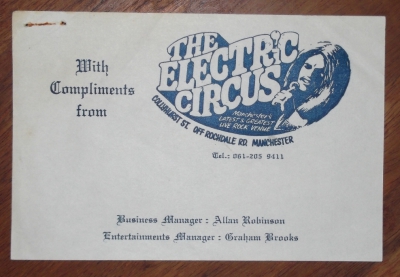
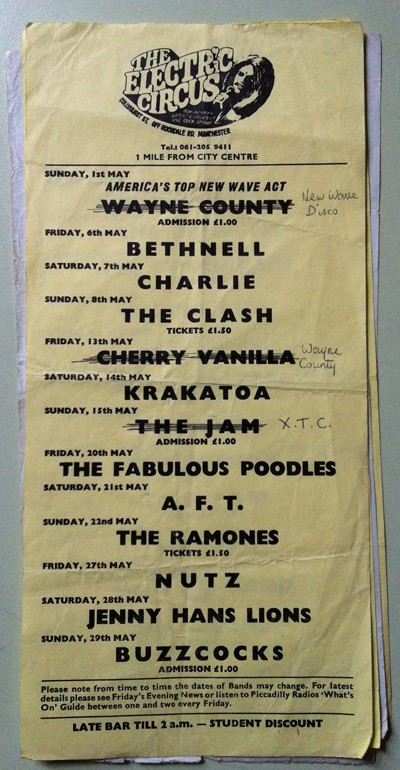
The Electric Circus
Collyhurst St.
(Off Rochdale Road)
M40 8LH
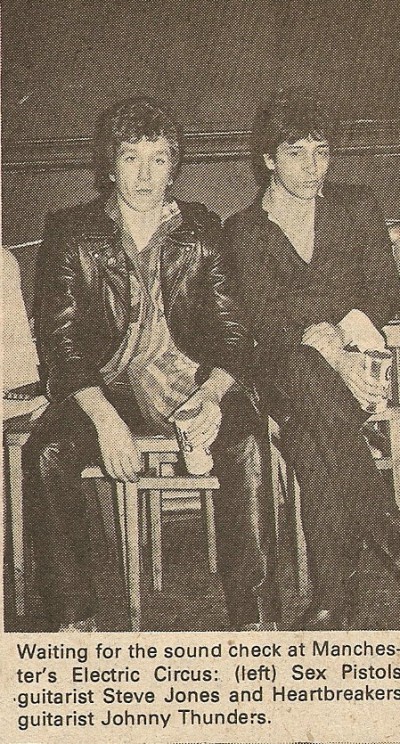
Situated just a mile outside of the city centre,The Electric Circus opened at the end of October 1976. Collyhurst was a down at heel area on the North side of town,long before the terms gentrification or Northern Quarter came into common parlance. It was the birthplace of Les Dawson,as well as footballers Stan Bowles and Nobby Styles.
The Circus’s insalubrious interior and surroundings reflected the gritty drabness of the 1970’s,and its location required a concerted effort from punters to get there.Although it started out as a heavy rock venue,it soon became an important place for the bourgeoning punk scene. The building was originally home to the rather grandiose sounding Palladium Variety Club,and for a time it was also a cinema.The Electric Circus was originally the name given to Sunday nights at Mr.Browns,a nightclub on Brazil Street in the city centre,in the very late’60’s and early’70’s.A young John Cooper Clarke performed his poetry there situated comfortably amongst the progressive and hard rock bands.
An inauspicious opening evening’s entertainment was provided by Supercharge,a band from Liverpool,who were popular enough to draw a good sized crowd.They were signed to Virgin and had achieved a number 3 hit in Australia in 1976,plus they also opened for Queen at Hyde Park earlier in the year.
Although the place wasn’t opened as a specific punk venue like The Roxy in London,it soon began to put on punk nights (Sunday’s only to start with).Slaughter and The Dogs,Buzzcocks and other new Manchester bands like them were springing up in the area and looking for somewhere to play.The nationwide paranoia the Sex Pistols had instilled in the Great British public’s minds, had led to many places refusing to let these new upstarts play their noise.It became a meeting place for like minded,disaffected kids who just needed somewhere to go.
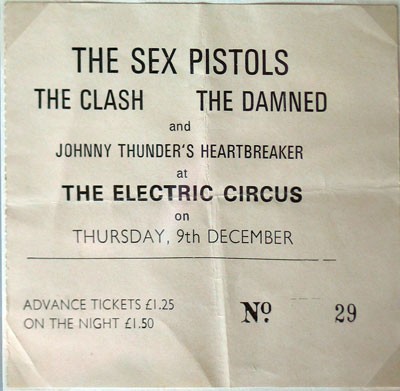
The Pistols themselves played at the Circus twice in December 1976,on the 9th and 19th,as part of the disrupted and shambolic Anarchy tour,(the 19th was a hastily rearranged gig after the original venue in Guildford banned them),cementing the close relationship between Manchester bands and their London brothers.
As the punk movement grew,more frequent gigs began to be put on.The 28th of November 1976 saw Slaughter and the Dogs supported by The Damned;all for 75p! From then on everyone who was anyone in the punk scene played here throughout’77: The Clash, Adverts, Saints, The Jam, Siouxsie and the Banshees, Ramones, The Fall, John Cooper Clarke, The Stranglers, Joy Division, Rezillos, The
Boys, The Slits, 999, Ultravox, The Cortinas, The Drones, Suburban Studs, The Slugs, The Worst, plus many more, including The Negatives which featured Author/Journalist Paul Morley(a.k.a Modest Young), Photographer Kevin Cummins, and Buzzcock’s manager Richard Boon.Ticket prices ranged from 75p to £1.50, which sometimes included 3 bands.It was a dangerous place for the punks making their way home, frequently attacked by the Neanderthals who couldn’t handle someone being different and individual,although the Manchester punk look was more D.I.Y. and not as stylised as the London scene.
The Electric Circus was a regular feature on ‘So It Goes’, Tony Wilson’s half hour television programme, showing live performances from a number of punk bands, giving them much needed exposure and helped to recruit new converts on a weekly basis.
The club closed its doors just under 12 months later and the last 2 nights were recorded for posterity and released as the album ‘Short Circuit’. Initially planned as a double album it ended up seeing the light of day in 1978 as a 10″record in Blue, Black and Orange vinyl consisting of just 8 tracks from The Drones, Steel Pulse, John Cooper Clarke, The Fall, Buzzcocks, and Joy Division.Some copies included a free 7″ e.p. from John Dowie.Most of what was recorded was unfit for use because of the excessive crowd noise!
A month later the place changed its name to The Venue with the sub title of ‘The New Electric Circus’,but this was short lived.In fact the brevity of its tenure meant that The Electric Circus’s important contribution to punk rock will always be fondly remembered.
Band On The Wall
Band On The Wall
Swan Street
M4 5JZ
The origins of the Band on the Wall begin in 1803 as the George and Dragon public house.The area around Swan Street was a squalid,dangerous place inhabited by scuttler gangs and pickpockets.Manchester was growing rapidly,with many businesses,factories and mills around the Ancoats area.Smithfield Market was developed and eventually expanded to a 4 acre site finishing its’boundary at the back of the pub.Irish and Italian immigrants made up a large percentage of the population,and it would be Irish entrepreneur brothers,Bernard and John McKenna,who bought and developed the pub over the next few decades.They also owned other businesses and went on to build The Wellington pub on Rochdale Road,now called Marble Arch.
Fast forward over 100 years and the pub is struggling following the relocation of Smithfield Market.It closed its doors in 1974.A year later local musician Steve Morris, a jazz music lover,took over the lease on the building to fulfil his dream of opening a jazz club.After refurbishment, including a new stage in place of the raised platform that the previous resident band had played on,and now the inspiration for the new name ‘Band On The Wall’,it reopened for business on 12th September 1975.
Jazz was to remain the musical staple diet of the club, but in 1977 the Monday Rock Club night was introduced and promoted by the New Manchester Review magazine.The night was designed to showcase local bands,and also to broaden the venue’s musical diversity.The magazine had been put its first event on in November 1976 to celebrate its 1st birthday.The headline band that night was Bolton’s finest,Buzzcocks along with Tom Mcmasters,whose band included a bass player called Martin Hannett. This gig was the catalyst that opened Morris’s mind up to putting on other genres of music.It didn’t have to all be about navel gazing,or endless complicated solos from gifted musicians,he encouraged artists of varying degrees of competence to get up and do something.Soon there were performances from a diverse range of acts;Country rock,poetry readings including John Cooper Clarke and the future Poet Laureate Carol Ann Duffy,even an all women clog band!
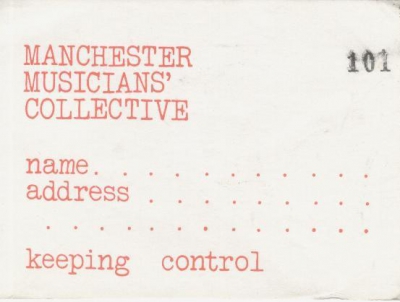
Also at this time in 1977 the Manchester Musicians Collective was formed with a commitment to encouraging and promoting musicians and bands and giving them a voice.They received a grant towards rehearsal room hire and transport,and groups went to them for assistance.After outgrowing their original premises on King Street as well as putting on The Fall’s first ever gig there,they chose the Band On The Wall as the place to put their showcases on.Sunday’s was the only night available which clashed with Electric Circus’s punk nights.One band which were helped by the MMC were Joy Division.Ian Curtis is on record as praising the collective for giving them a venue and meeting other bands and musicians,swapping ideas and the way that it was set up meant that the band could experiment in front of an audience.They were allowed and encouraged to take risks.
Joy Division were regular attendees whether on the stage or in the crowd possibly watching The Fall,Frantic Elevators,Fast Cars amongst other protagonists of the new breed.The punk gigs at Band On The Wall were nowhere near as violent or intimidating as the other venues in town,although Tony Wilson would come in for sporadic bursts of verbal abuse on his visits looking for new bands for Factory records and also The Russell Club in Hulme.
Between 1975 and 1979 over 200 different acts had played there,and around 1500 gigs had been put on,but the writing was on the wall for the venue.The New Manchester Review magazine went bust,so the Monday night gigs were jeopardised and then the Musicians Collective moved their shows to Rafters,which was a bigger venue.The Monday night gigs limped on into 1980,but dwindling audiences forced its’ demise.
Throughout the ’80’s and ’90’s,Band On The Wall became a venue synonymous with Blues,Reggae,and World music.It was overlooked on touring schedules by mainstream or alternative artists,who would instead play at The International’s 1 and 2 or the University.Between 2005-2009 the building undertook a 3.6 million pound refurbishment,funded by Arts Council England,Heritage Lottery Fund,and Manchester City Council.The venue is now owned and run by registered charity Inner City Music,and is a not for profit venue.Its future looks bright.


Manchester. It never rains……..
Manchester; It Never Rains……..
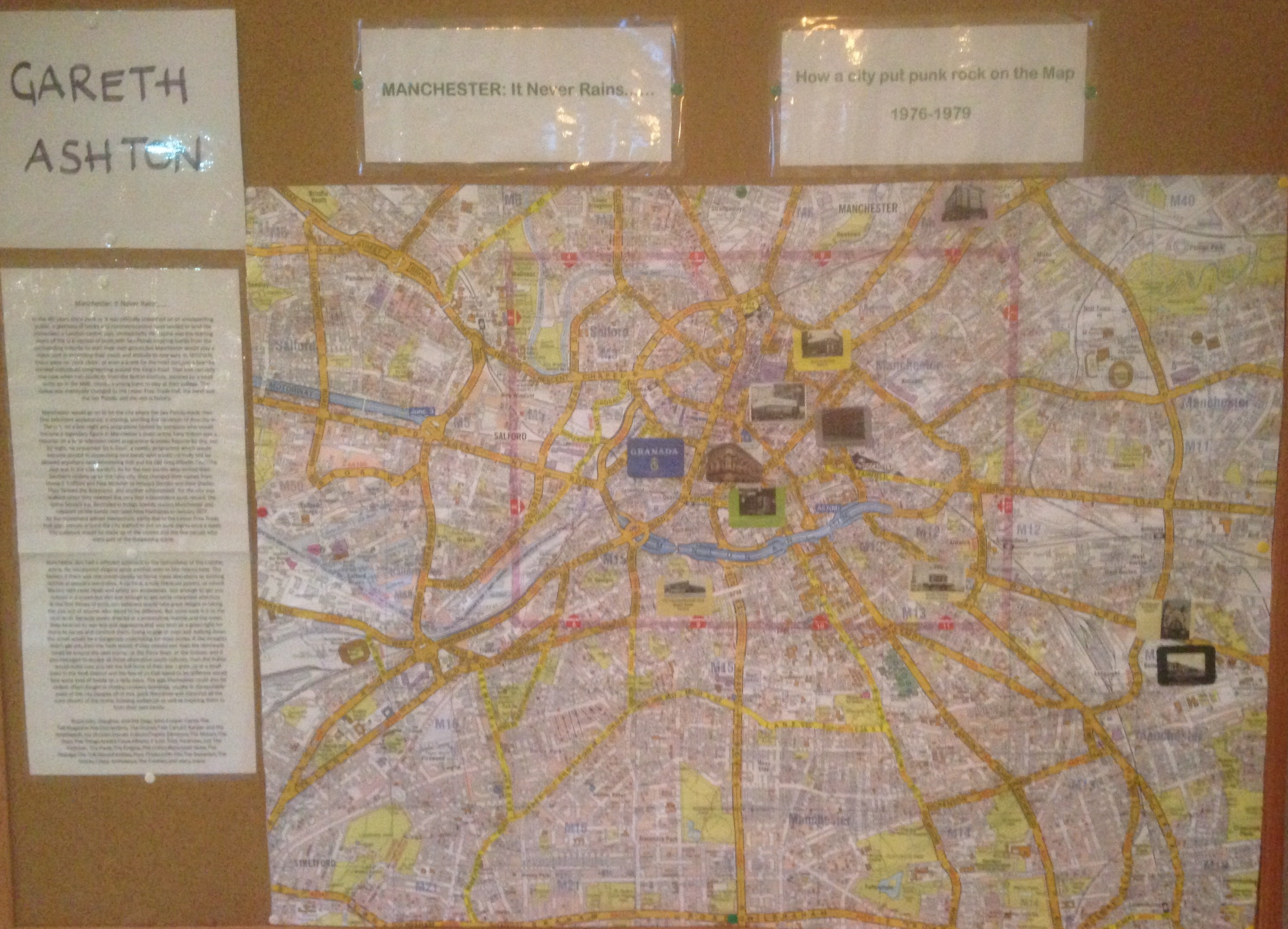
In the 40 years since punk rock was officially unleashed on an unsuspecting public, a plethora of books and commemorations have tended to lend the movement a London-centric bias. Undoubtedly the capital was the starting point of the U.K version of punk,with Sex Pistols inspiring bands from the surrounding suburbs to start their own groups,but Manchester would play a major part in extending their music and attitude to new ears. In 1975/1976 there were no ‘punk clubs’, or even a scene for the most part,just a few like minded individuals congregating around the King’s Road. That was certainly the case when two students from the Bolton Institute, inspired by a small write up in the NME, invited a young band to play at their college. The venue was eventually changed to the Lesser Free Trade Hall, the band was the Sex Pistols, and the rest is history.
Manchester would go on to be the city where the Sex Pistols made their first television appearance; a snarling, startling live rendition of Anarchy In The U.K. on a late night arts programme hosted by someone who would become a legendary figure in Manchester’s music scene.Tony Wilson was a reporter on a local television news programme Granada Reports by day, but by night, he presented ‘So It Goes’, a weekly programme which would become pivotal in showcasing new bands who would normally not be allowed anywhere near Whispering Bob and his Old Grey Whistle Test.(The clue was in the title surely?). As for the two youths who invited their Southern cousins up to the rainy city, they changed their names from Howard Trafford and Pete McNeish to Howard Devoto and Pete Shelley. They formed the Buzzcocks, and another achievement for the city was realised when they released the very first independent punk record, the Spiral Scratch e.p. Recorded in Indigo Sounds studios,Manchester and released on the bands own label New Hormones in January 1977.
As the movement gained momentum, partly due to the Lesser Free Trade Hall gigs, venues around the city started to put on punk nights once a week. The audience would be made up of the curious and the few people who were part of the burgeoning scene.
Manchester also had a different approach to the fashionistas of the London scene. No Situationist slogans spray painted onto to fine fabrics here. The fashion,if there was one,would usually be home made alterations to existing clothes in people’s wardrobes. A rip here, a hole there,old jackets, or school Blazers with razor blade and safety pin accessories. Just enough to get you noticed in a crowd,but also just enough to get some unwanted attention.
In the first throes of punk,non believers would take great delight in taking the piss out of anyone who dared to be different. But some took it it to the next level. Because punks dressed in a provocative manner,and the music they listened to was fast and aggressive,that was seen as a green light for many to harass and confront them. Going to gigs or even just walking down the street would be a dangerous undertaking for most punks. If the straights didn’t get you,then the Teds would; if they missed you then the skinheads could be around the next corner; or the Perry Boys; or the Grebos; and if you managed to escape all those alternative youth cultures, then the Police would make sure you felt the full force of their law. I grew up in a small town in the Peak District and the few of us that dared to be different would face some kind of hassle on a daily basis. The gigs themselves could also be violent affairs,fought in shabby,rundown buildings, usually in disreputable areas of the city.Despite all of this, punk flourished and attracted all the main players of the scene, building audiences as well as inspiring them to form their own bands:
Buzzcocks, Slaughter and the Dogs,John Cooper Clarke,The Fall,Magazine,The Distractions, The Drones,Fast Cars,Ed Banger and the Nosebleeds,Joy Division,Durutti Column,Frantic Elevators,The Motors,The Hoax,The Things,Armed Force,Alberto Y Lost Trios Paranoias,Jon The Postman, The Panik,The Enigma,The Critics,Manicured Noise,The Passage,The Still,Steroid Kiddies,Pure Product,Elti Fits,The Reporters,The Smirks,Crispy Ambulance,The Freshies,and many more.
Rebellion 2016
This year at Rebellion,along with the book,I have put together an exhibit which focuses on Manchester and it’s important role in promoting the first months of punk,helping it to grow by inspiring and influencing people to form their own bands and who in turn would engage others to do likewise. Punk tends to have been centered on London as the most influential city,which is true in part as that was where the fledgling bands started to mould a scene,but Manchester and to a lesser extent Liverpool would play a major part in its development.The Pistols first appearance on television and the first fully independent punk record release both took place in Manchester. I have chosen 11 locations which between 1976-1979 were pivotal to allowing bands to play either in the respective clubs or on regional television for the first time. I’ve also had some badges made of some of the iconic gigs,limited to just 6 of each.